
TL;DR
Developing effective oral peptide formulations, particularly in novel delivery systems like gummies, presents unique challenges due to the inherent fragility of peptides. Unlike many other supplements, peptides are highly sensitive to heat, moisture, and shear forces common in traditional manufacturing processes. For instance, standard gummy production often involves high temperatures (e.g., 200 degrees), which can degrade peptides and compromise their potency and structural integrity. Achieving successful oral peptide delivery requires specialized low-temperature manufacturing processes and sophisticated encapsulation technologies to protect the peptide from degradation during production and subsequent gastric transit. This involves carefully orchestrating every step, from initial inclusion and microencapsulation to drying and final product integration. Beyond the technical intricacies, a robust quality management system is paramount to ensure consistent potency and stability across every batch, allowing for repeatable, high-quality outcomes. The goal is to design a process that not only preserves the peptide but also prepares it for optimal absorption, navigating the complex journey from ingestion to systemic availability.
The Fragile Nature of Peptides in Manufacturing
Hendrik: Okay. Go ahead. Okay. Yeah. Let me start by saying this. And I always have to start with our own technology. Although we are at Advanced Power Dynamics, focuses on sensitive products, products that’s prone to denaturing, peptides are particularly fragile. And what we have heard so far is that things like stability, bioavailability, shelf life are critically important when it comes to to peptides. So things like Sheer heat exposure, extended exposure to heat are detrimental to stability and to shelf life and to the quality of the product. There is there’s three parts the way that I see this in the manufacturing process that you have to focus on. It is the inclusion technology or the microencapsulation on the liquid side before.
Hendrik: You dry the product, and then after you dried the product, there is the gummy making process. All three parts of those processes include things like high shear, so there’s mixing involved, there’s temperature involved, which is cause could cause denaturing of the peptide.
And then obviously there is extended heat that the product can be exposed to. And although we have the technology to manage these, it’s always critically important that you have the processes in place to make sure that you focus on all of these aspects and you have control over them. Things like moisture activity and water activity and moisture content in the product, critically important. You may produce a product. With low moisture content and low water activity in the foot in the foot in the second stage of the process, like in the drying process.
Hendrik: But if in the gummy making process, you may add moisture to that product. And moisture is directly related to things like microbial growth. And that’s related to to shelf life. So it is it’s important that you focus on these different aspects. Are you Treat the product in the first stages on the liquid handling. That is the mixing, it’s a shear factor.
It is the consistency of the, sorry, it’s the consistency of the mixing. Then it’s the drying process. It is control over the inlet temperatures and outlet temperatures, the time that it’s exposed to the temperatures, and then achieving those moisture content and water activity requirements. And then the last step in a gaming.
Hendrik: Making process, it is how do you manage what you have in your current product that you want to turn into a gummy and still manages the moisture content. There’s there’s heating involved, so you have to manage all of that so that you don’t have a product after the first two stages that achieved your potency levels, but in the final process, you did not achieve the potency levels because you could not. Manage the temperatures and the shear factors in the final stages of the process.
Tailoring Delivery Systems for Peptide Stability
Will: Yeah, that’s that’s exactly the point to end on, Hendrik. There, for example, there are a lot of companies that are that are in the gummy space or they’re they’re confectionary companies that have very high temperature processes and they’re used to, running a 200-degree batch to make gummies. That is not going to work in the peptide sector. It requires a low temperature process for the peptides and for the delivery systems because the nature of the peptides they are incredibly fragile., anyone who has looked at peptides and the handling instructions will notice that people are encouraged to freeze their peptides until they get them out and reconstitute them if they’re freeze-dried or use them. If they’re objectables. And that gives you some perspective on how fragile these synthetic constructed peptides are.
Will: The cooler the manufacturing process for the gummy, the easier it will be to work with, even when you have a coated or protected peptide going into that gummy manufacturing cycle, which is precisely why.
Act has focused on developing close partnerships to fine-tune that process. As Hendrik said, there’s no point in having a great peptide structure go into the final phase and then have it all destroyed because it’s exposed to too much heat for a few minutes. And it’s entirely possible it’s being done right now. But the reality is that almost nobody’s doing it because almost all these gummy processes are somewhere between. 20 and 60 degrees too hot, and they’ll figure that out the hard way. And I’m curious, because Hendrik, you were talking a lot about the specifically the manufacturing side of things and peptides being so fragile.
Ensuring Quality and Repeatability in Peptide Production
Will: When we talk about that, because from the from the layman’s point of view, or even I think from maybe a business owner’s point of view, who doesn’t necessarily deal So much in the manufacturing side of it, but when they’re reaching out to companies to try and figure out their contracting, how much more fragile is let’s say your peptides or a peptide that you guys are working on currently versus let’s say another supplement that you could be doing the same thing with? Is it is even worth comparing it
Hendrik: It’s difficult to make a comparison like that. Peptides is definitely A much more fragile molecule than any other molecules, like a lot more fragile, like proteins, for example. And proteins are sensitive to things like shear heat exposure, extended exposure to heat over time, and so forth. You have to be very careful, you have to know what you’re dealing with. What peptide and what is the requirements in the end product? What is the moisture content requirements? What is the water activity requirements? And you have to have the technology that supports that so that yes, I can dial in my process parameters to achieve those specific requirements. That is shortened exposure to the heat, lower temperatures, and then achieve the moisture content and the water activity requirements without exposing the product to that extent. Exposure to heat and to high temperatures. And that’s where our technology comes in, because we have more than 25 years of drying sensitive products with really very good results.
Hendrik: And it’s the same with peptides. As long as you have a technology that supports these requirements, and what those requirements or those specifications are, then that you can design your front end process so that is the inclusion part or the micro encapsulation part to support the drying technology and the drain technology will support the the the quality and the requirements in the end product and so that obviously you you provide a product to the to the to the the gummy side of the process that can handle those requirements for same thing there’s there’s Sh there’s shear, there’s consistent mixing involved, there’s temperature exposure involved, just like Well was explaining now.
These things should go hand in hand and they should support each other.
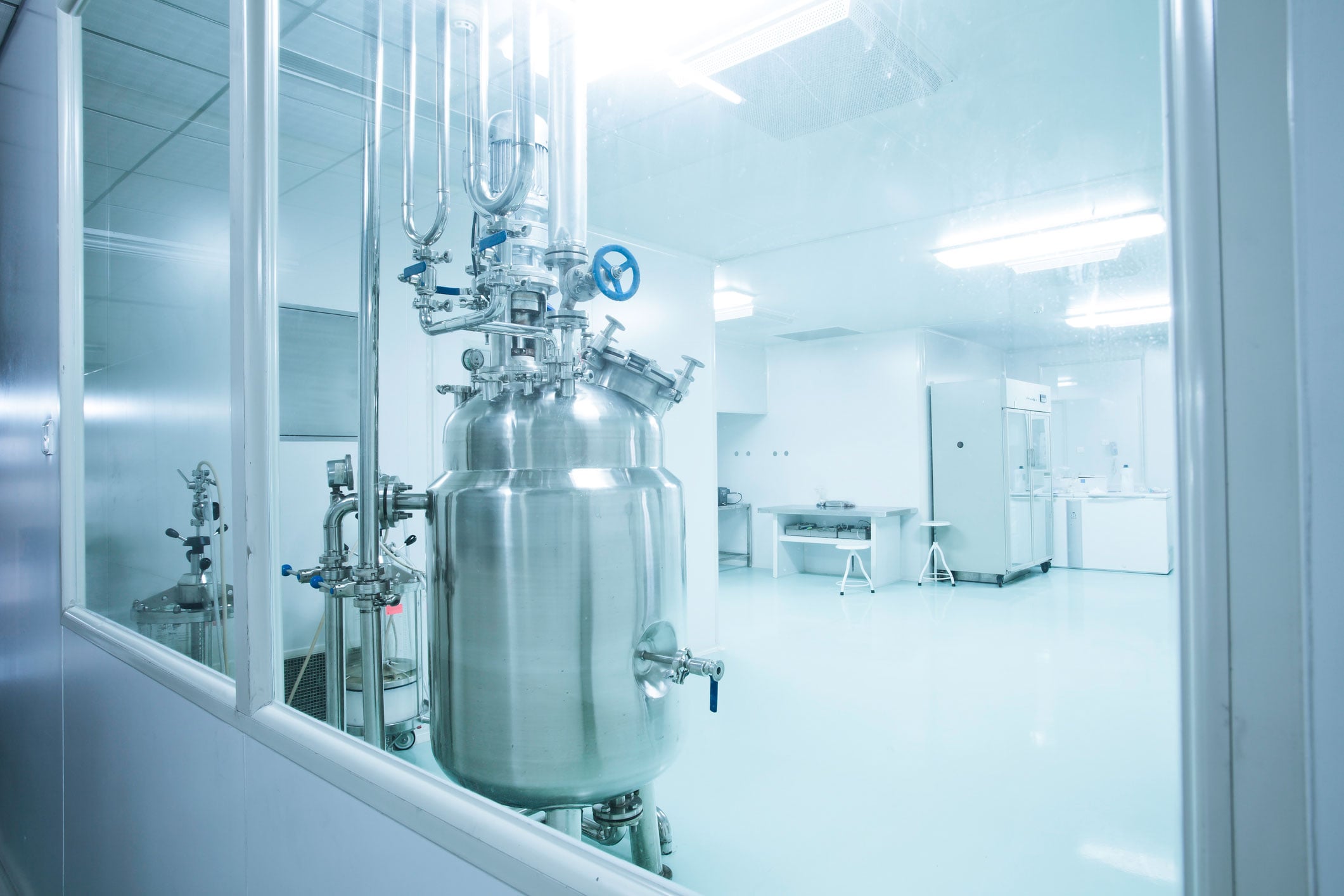
Ulli: I do want to add one aspect to this because I don’t I’m not sure if we mentioned it, but all of this has to take place in a clean room. In a dust-free environment with an airlock and an air handler, where you really make sure that, no contamination of any sort can take place. Those so this is a whole this is not, the regular supplement manufacturing process. This is a whole level above that. Yeah.
Will: Oh, and I think I think that Hendrik, you brought it up really well where it’s it’s the technology is going to be a massive barrier for companies to even be able to do any of this manufacturing. But additionally to that, you have to have that as well as the expertise to even know what peptides are doing what and what products need what handling. That the again from an outside perspective, the expertise and the technology both go hand in hand. It seems like a very hard process to even find somebody or a manufacturer who’s able to make this leap into this product. Well I I think what you’re seeing Stephen is it’s it’s just you keep adding The boxes that you have to check to make this work.
Will: It’s like you start off in some areas of different industries with a low level of requirement. It’s the ticket entry. And it’s almost like graduating from being good at one sport to being good at so many sports, you can compete in the cathlon. And that’s what you have here because we keep adding steps to get to where we are. We have to translate from, construct, we don’t do the manufacturing of petrol. But taking that really complex constructed peptide, translating it to oral, figuring out how to protect it as it goes through the gastric acid of the stomach, unwrapping it once it’s been protected, preparing it for absorption, getting it absorbed into the body., all of these things are very sophisticated individual steps.
Will: And then you have to link them together and delivering it in a guide. Or some other system that has its own unique manufacturing process.
These are all very complicated things. And as we pointed out, a lot of them are, to borrow a medical term, they’re contraindicated., doing something in one area makes it harder to do a successive step down the chain.
Will: Yeah. It’s it’s like the it’s like the forms on different websites where when you click one box, the other box goes away. And when you click that box, the other box goes away, and you just go back and forth trying to make them all work. Together but no i think it’s amazing that you guys have both sides of that to be able to again figure out that very multivariant equation and if i can add one more thing here to what uli mentioned about the quality control a quality management system is critical because very important here is once you have achieved the process requirements and the product requirements, you have to be able to repeat that every single time.
Will: And those are the aspects where most companies fail. You have to have the processes in place and that includes the quality management process, it includes operational process and procedures, the batching, the drying the drying conditions, you have to have that 100% Place so that you can achieve the same powder and the same product every single time. That’s something that we have also perfected over the years. It’s something that we really focused on. We don’t only look at the liquid side, we look at the whole process holistically, and we ensure that we have everything in place, every step, every process, every procedure, so that we can produce the same quality product.
Will: Product every single time and also on different scales. Now I know we’ve talked about that a lot before with from even just the like the bench top, so to speak, to the full-blown manufacturing, how meticulous you guys are about the manufacturing process being able to scale up. And so moving on to another question, more specifically, I guess about how Tessrack Life Sciences fits within this, but how can Tessrack Life Science? Sciences position delivery technology as a higher value conversation rather than simply selling a commodity peptide powder.
Frequently Asked Questions
Why are manufacturing processes critical for the stability of oral peptides, especially in formats like gummies?
peptides are inherently fragile molecules, highly susceptible to degradation from heat, moisture, and mechanical stress. Many traditional manufacturing processes, such as those for gummies, involve high temperatures that can compromise peptide integrity. Therefore, specialized low-temperature processes are essential to protect peptides throughout production, ensuring they retain their potency and structure in the final oral delivery system.
What technological considerations are necessary to enhance peptide bioavailability in oral delivery systems?
Enhancing peptide bioavailability orally requires sophisticated technologies that protect the peptide from the harsh gastric environment and facilitate absorption. This includes microencapsulation to shield the peptide from stomach acid and specialized delivery systems that prepare it for absorption in the intestine. The manufacturing process must support these technologies, ensuring the peptide remains protected and bioavailable as it travels through the digestive tract.
How do peptide delivery systems, such as those for oral intake, address potential degradation during digestion?
Oral peptide delivery systems are designed to protect fragile peptides from the stomach’s acidic environment. This often involves specialized coatings or encapsulation methods that shield the peptide from gastric juices. Once past the stomach, the delivery system is engineered to release the peptide in a way that optimizes its absorption, preparing it for uptake into the bloodstream and maximizing its potential effect.
What role does a quality management system play in the consistent production of oral peptide products?
A robust quality management system is critical for consistent production of oral peptide products. It ensures that once effective process and product requirements are established, they can be repeated precisely for every batch. This includes rigorous control over operational procedures, batching, drying conditions, and ingredient inclusion, guaranteeing that each product consistently meets the required potency, stability, and quality specifications.
Beyond temperature, what other environmental factors can impact peptide stability during oral product manufacturing?
Besides high temperatures, other environmental factors significantly impact peptide stability during manufacturing. These include moisture content, shear forces from mixing, and sustained exposure to light or oxygen. Manufacturing processes must carefully manage all these variables, often employing specific drying technologies, consistent mixing protocols, and protective packaging to prevent degradation and maintain the peptide’s integrity and potency.